


Okay confession time. When I was getting my MBA, I had to take my statistics course twice.
The problem wasn’t my capacity or that I was “bad at math.” I’m actually quite good at it. The issue was the teaching method. It was lecture heavy, and that’s not how I learn. It didn’t matter how hard I worked or how tenacious I was. Nothing stuck.
And I really wanted my MBA because I believed it mattered for being considered for leadership roles in corporate environments. So I withdrew from my statistics class the first time because I couldn’t keep up. The second time, I hired a tutor to get me through it.
What I realized with my tutor’s help is that I don’t learn well when I’m being lectured at. I need to read, write things down, and work through examples to make sense of them.
So if you’re struggling to close a skills gap that affects your next career step, figure out what kind of learner you are so you can learn in a way that actually sticks.

Why This Matters More Than It Sounds
A skills gap is not just logistical. It can get emotional fast. I know C suite leaders whose confidence has taken a hit because they couldn’t learn quickly enough. It can show up as second guessing, slowed decision making, and playing smaller than they normally do.
When the learning method fails, it can feel like proof that you’re behind, about to be found out, or not cut out for the next level.
That proof is flimsy without a lot of evidence. A better explanation is often true. You’re using the wrong training format for your brain.
The Four Learner Types
Think of the four learner types as a shortcut for choosing the right training. They describe how you take in information, how you make sense of it, and how you’re most likely to turn it into real skill on the job. Most people are a blend, but one or two types usually lead.
Quick note: these categories are a tool, not a box. Use them to choose smarter methods, not to decide what you “can’t” do.
Visual learners: You learn best when you can see it. Diagrams, examples, demonstrations, a whiteboard moment where it finally clicks.
Auditory learners: You learn best by hearing and talking. Conversations, hearing it out loud, talking it out loud, listening, asking questions in real time.
Kinesthetic learners: You learn best by doing. Reps, role play, trial and error, building a tiny version, practicing in the real environment.
Reading and writing learners: You learn best through text. Clear steps, notes, frameworks, outlines, and writing your way into understanding.
If you’ve been following me, you can probably see how I’m a reading and writing learner. I’m always providing frameworks and asking questions.
Quick Self Check
Here’s a simple way to figure out how you learn.
Start with a time you struggled to learn and it just wouldn’t stick. What format was being used: reading, watching, listening, or jumping in and doing it?
Now think of something you learned more easily. How did you learn that one?
You’re not hunting for a perfect label here. You’re noticing what makes learning click for you so you can choose training that matches your brain instead of forcing yourself through a method that keeps you stuck.
Match The Training To The Learner
If you’re a visual learner, stop forcing yourself to “just read the manual.” Find a short demo, a template, or a marked up example.
If you’re an auditory learner, do not learn alone in silence. Find a live session, a study buddy, or record yourself explaining it and listen back.
If you’re a kinesthetic learner, stop collecting information and start collecting reps. Practice first, study second. Use simulations, mock runs, and real world tasks.
If you’re a reading and writing learner, give yourself clean instructions and time to synthesize. Take notes, create a checklist, and write a one page summary in your own words.
When my youngest daughter was learning her times tables, we would drill them in the car. She hated it and never got them right. Then I realized she’s a kinesthetic learner. So we tossed a tennis ball back and forth as she ran the tables and everything clicked.
Bottom Line
If you’ve identified a skills gap and you’re struggling to close it, don’t jump straight to “I should be able to pick this up faster.” Start by checking the training method. When you learn in a way that matches how you learn best, effort turns into skill, and skill turns into momentum. Sometimes the breakthrough isn’t more effort. It’s a different approach.
Before You Go! A Special Invitation!
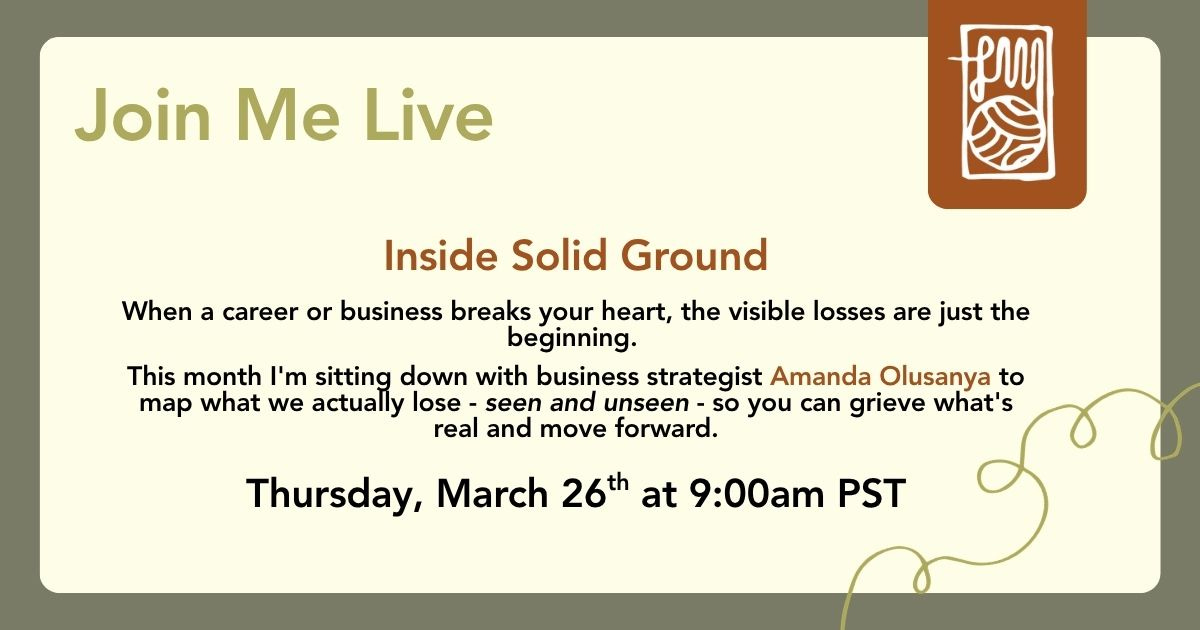
If you’re longing to hear more personal stories and insights about how other folks are navigating career grief, join me this Thursday, March 26 at 9 am PST for a Substack live. My guest is global entrepreneur Amanda O who was a successful barbershop owner and YouTuber and is now an investor and coach. She has had some significant pivots in her career and we’ll be chatting about why it’s important to recognize not just the visible losses of career grief, but also the hidden ones. Come join us!

If someone came to mind while you were reading this—please send it their way. You never know the impact a well-timed message can have.
Related Content
Longing To Feel Lighter?
Professional heartbreak can leave you spinning. You replay what happened, question your judgment, get stuck in indecision, and worry you’ll never get your mojo back.
Solid Ground is the paid member program inside the Moonshot Mentor Substack community that helps you move from spinning to forward motion.
Paid members tell me they feel less weighed down. Empowered. Relaxed for the first time in a long time. Here’s the thing. It’s not because they got a pep talk. It’s because they finally got an accurate explanation for what’s happening and a way through it.
You’ll get monthly video lessons with a guided companion to help you apply the work, live coaching for real time support, and weekly meditations and journal prompts to rebuild confidence and make decisions without panic.
Become a paid member to access Solid Ground, stop misdiagnosing yourself as broken, and start moving again.
Journal Prompts
Here are 3 journal prompts for Solid Ground members. Use these to spot the learning methods that actually work for you so you can close a skills gap without burning extra energy.


